

BIOTOPE
By Rhett Butler

BIOTOPE AQUARIA
A biotope aquaria is an aquarium that is set-up to simulate a natural habitat. The fish, plants, water chemistry, and furnishings are similar to those that can be found in a specific natural setting.
Always check compatibility! Some species from a particular habitat are not suitable tankmates. For example, the Peacock Bass will eat small tetras since they are their natural food in the wild.
The biotope aquarium can be adapted by adding species from disparate areas that have similar water requirements.
Mongabay.com is the sole effort of Rhett A. Butler, who has taken the photos and written all of the content found on the site. If you find mongabay.com a useful resource I hope that you may consider making a donation to help support the site. You can also assist by clicking on one of the ad links to the right.
[Photos from various habitats/biotopes]
Freshwater fish species listed by country and ecosystem -- excellent resources for constructing biotope aquaria.
Be sure not to miss links to other biotope resources and sites.
++++++++++++++++++
African River Rapids
++++++++++++++++++
The Zaire (Congo) River is the second largest river system in terms of volume. This mighty river drains much of West and Central Africa. Along its 2800 miles, the Zaire River moves through many environments including over 200 miles of rapids and cataracts. This rapid region is the inspiration for this biotope aquarium, although similar environments exist in other African rivers.
ECOSYSTEMS:
Congo_Zaire, Agnebi, Bandama River, Benue River, Bia River, Buba River, Casamance River, Cross River, Gambia River, Kariba, Little Scarcies, Niger River, Ogun River, Rokel, Saint John, Saint Paul, Saloum, Senegal River, Volta, Weme, Como� River, Corubal River, Ebrie, Fatala, Geba, Kainji Lake, Kogon, Kolente, Konkoure, Loffa, Mano, Mao, Mono River, Nipoue, Pra, Sassandra, Sewa, Tano
WATER:
pH: 7.0-7.5, 6-10 dH, 77-81 F (25-27 C)
TANK:
The water in this habitat is highly oxygenated due to the turbulence created by the rapids -- therefore the water in the aquarium should be well-aerated. Leave plenty of open swimming area, but use some large rocks. The substrate should be fine gravel or sand. To create water current, place a spray bar from a canister filter, or a strong circulating pump at one end of the aquarium.
PLANTS:
Because of the strong water current, the rapids are not a hospitable place for plants.
In the aquarium, plants can be used if they well anchored or protected from the current.
Plants suitable for such an environment include the African Water Fern (Bolbitis heudeloti) and Anubias species.
FISH:
Eutropiellus, Distichodus, Synodontis, Steatocranus, Teleogramma, Lamprologus
+++++++++++++++
Lake Tanganyika
+++++++++++++++
Details on Lake Tanganyika can be found in the fish section on Lake Tanganyika cichlids.
ECOSYSTEMS:
Lake Tanganyika
WATER:
pH: 7.8-9.0, 12-20 dH, 75-82 F (24-28 C)
TANK:
A rocky set-up, complete with caves and ledges is recommended.
The substrate should be fine gravel or sand, scattered with snail shells.
Use an efficient filter that creates little water current.
Make frequent water changes since Lake Tanganyika species are especially sensitive to water pollutants.
PLANTS:
Vallisneria is the only commercially available species, but Anubias and Java Fern are also suitable if the aquariast is willing to bend the biotope rules.
FISH:
Lake Tanganyika cichlids including snail shell-dwellers, Synodontis, Afromastacembelus eels, Tanganyika Rainbowfish.
+++++++++++
Lake Malawi
+++++++++++
Details on Lake Malawi can be found in the fish section on Lake Malawi cichlids.
ECOSYSTEMS:
Lake Malawi
WATER: pH 7.8-9.0, 10-15 dH, 75-81 F (24-27 C)
TANK:
Please see the description on Lake Malawi cichlids for details.
PLANTS:
Vallisneria is the only commercially available species, but Anubias and Java Fern are also suitable if the aquariast is willing to bend the biotope rules.
FISH:
Lake Malawi cichlids (Mbuna, Peacock cichlids, Others), Synodontis
+++++++++++++++++++++++++
West or Central African River
+++++++++++++++++++++++++
West and Central Africa are full of rivers. Some of the better known are the Zaire (Congo), Ubanghi, Niger, and the Gambia.
Within each of these river systems are numerous biotopes -- this description will focus on species found in slow-moving sections and side streams.
ECOSYSTEMS:
Congo_Zaire, Agnebi, Bandama River, Benue River, Bia River, Buba River, Casamance River, Cross River, Gambia River, Kariba, Little Scarcies, Niger River, Ogun River, Rokel, Saint John, Saint Paul, Saloum, Senegal River, Volta, Weme, Como� River, Corubal River, Ebrie, Fatala, Geba, Kainji Lake, Kogon, Kolente, Konkoure, Loffa, Mano, Mao, Mono River, Nipoue, Pra, Sassandra, Sewa, Tano
WATER:
pH 6.9-7.2, 3-8 dH, 75-81 F (24-27 C)
TANK:
The tank should be furnished with wood for hiding places, and fine gravel or sand for a substrate.
The lighting should be muted, and the water should have a slight current.
PLANTS:
African Water Fern, Anubias, Vallisneria, Eleocharis.
FISH:
African tetras, Mormyrids, African Knifefish, African Butterfly fish, Synodontis, Hemichromis, Pelvicachromis, Tilapia
PHOTOS:
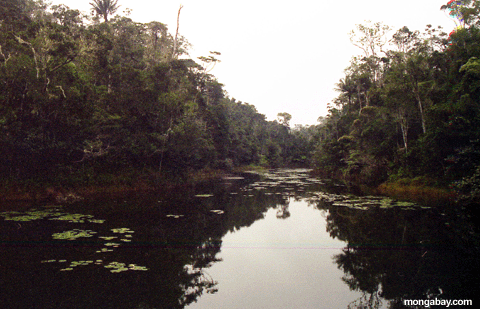
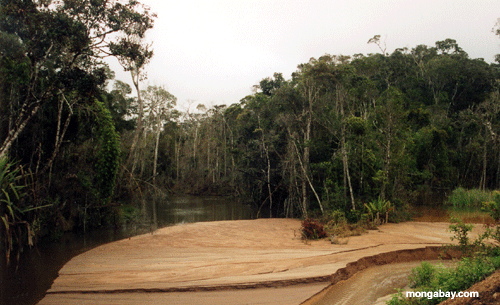
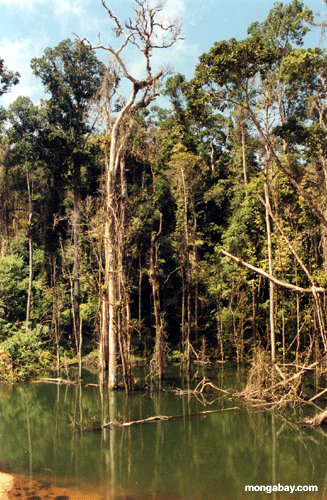
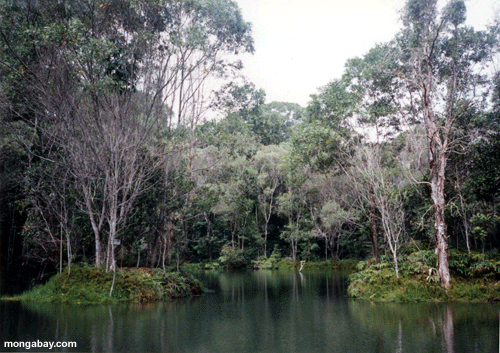
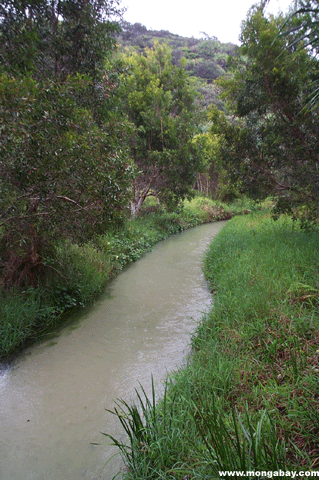
This picture was taken in Madagascar but is similar to habitats in West Africa, albeit with cooler temperatures [Mandraka, Madagascar, Mandraka, Madagascar].
+++++++++++++++++++++++++
Southern African Swamp
+++++++++++++++++++++++++
The Okavango Delta is among the largest swamps in Africa. The waters support a variety of species and vigorous plant growth making it an ideal subject for a biotope aquarium.
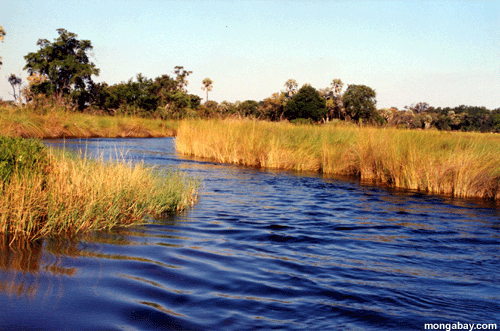
Reedy plants line the shores of waterways.
ECOSYSTEMS:
Chobe, Limpopo, Linyanti,
WATER:
pH 7.2-7.8, 2-8 dH, 70-75 F (21-24 C)
TANK:
The tank should have fine gravel, sand, or clay for a substrate.
Dense vegetation and floating plants help recreate the natural setting.
Use submerged wood to provide hiding places.
The lighting should be bright and the water should be clear.
PLANTS:
African Water Fern, Ammannia, Marsilea, Eleocharis, Anubias, Nymphaea, Water Lettuce
FISH:
Mormyrids, African tetras, barbs, spiny eels, Haplochromines, Tilapia, Hemichromis, Synodontis, Clarias catfish.
In the neighboring floodplain, annual Killifish can be found.
PHOTOS:
Okavango Delta (Botswana)
++++++++++++++++++++
Southeast Asian River
++++++++++++++++++++
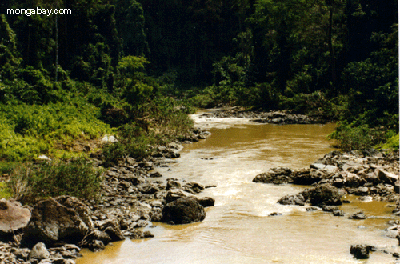
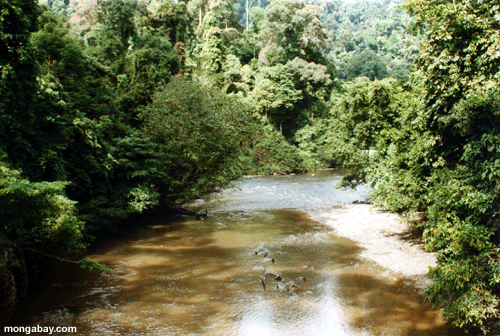
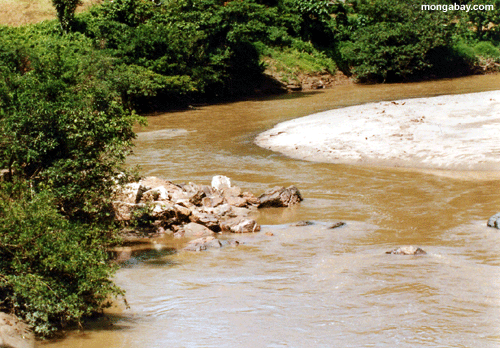
Much of Southeast Asia is rainforest and the location for a number of large rivers.
This biotope aquarium simulates a smaller tributary.
ECOSYSTEMS:
Amudar'ya, Chao Praya River, Irrawaddy, Mekong River, Salween
WATER:
pH 6.0-6.5, 2-8 dH, 79-84 F (26-29 C)
TANK:
The tank should be thickly planted with plenty of hiding places among wood and plants.
Use fine gravel or sand as a substrate.
PLANTS:
Crinum, Ceratopteris, Hygrophila, Cryptocoryne, Nymphaea
FISH:
Loaches, Barbs, Danios, Cyprind sharks (Red-tail, Bala, etc.), Pangasius catfish [suitable only for very large tanks], small Asian catfish, Knifefish
PHOTOS:
White Water River: Borneo White Water River, Borneo, Borneo, Borneo, Borneo, Borneo,
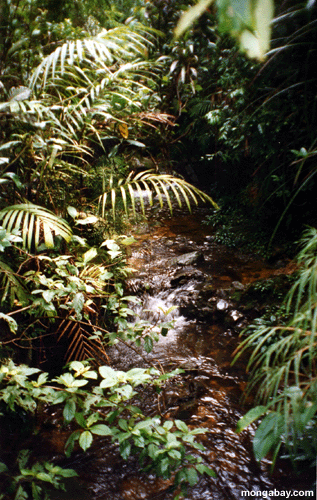
Whitewater creek: Borneo creek
++++++++++++++++++++
Thai Creek
++++++++++++++++++++
++++++++++++++++++++++++++++
Southeast Asian Blackwater Pool
++++++++++++++++++++++++++++
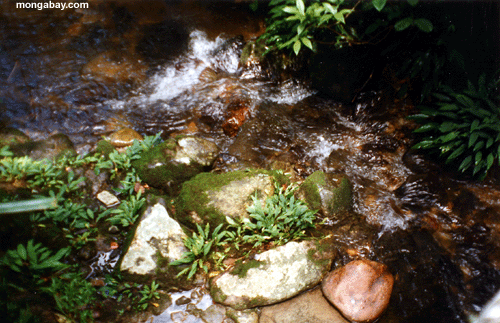
Creeks and streams originating from deep in the rainforest are often blackwater.
With decaying plant vegetation and few, if any, mineral sources, the water is acidic and very soft.
This environment provides a home to many species of plants and fish.
WATER:
pH 5.5-6.5, 0-4 dH, 81-84 F (27-29 C)
TANK:
The tank should be densely planted with a fine gravel or clay substrate.
Use wood to create hiding places and use peat filtration.
There should be little surface current.
PLANTS:
Cryptocoryne, Nymphaea, Eleocharis
FISH:
Gouramis, Bettas, Rasboras, Loaches, Glass Catfish, Cyprind sharks, Flying Fox
PHOTOS:
Blackwater creek: Borneo creek, Borneo creek
Clearwater forest pool Borneo
+++++++++++++++++++++++++++++
Southeast Asian Mangrove Estuary
+++++++++++++++++++++++++++++
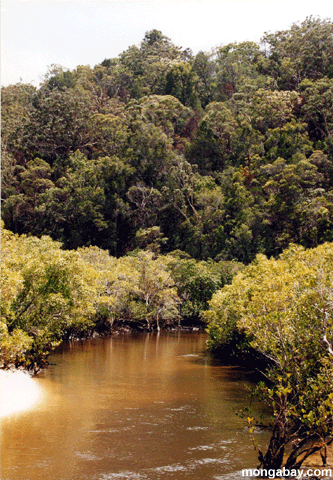
Mangrove swamps are found through the world where freshwater rivers come in contact with the ocean.
The result is a tidal region with varying salinity and water conditions.
The tides affect some of the types of fish present in the estuary, although fish termed �brackish water species" remain no matter the condition.
WATER:
pH 7.2-8.0, 10-20 dH, 75-82 F (24-28 C), 1.006-1.015 specific gravity.
TANK:
The tank should have a coral sand substrate.
Use wood and roots to recreate the mangrove roots of the swamp.
Use an efficient filtering system, because brackish water fish are heavy eaters, yet sensitive to water pollutants.
One popular brackish-water set-up is to leave the tank only half full with water. A sandy beach is constructed and potted mangrove seedlings grow above the water surface. Such a set-up allows an aquariast to observe unusual behavior from brackish species such as Mudskippers and Archerfish.
PLANTS:
Few plants can tolerate brackish conditions besides the mangrove.
Java Fern appears to be one of the only aquarium plants suitable for a brackish water tank.
Mangrove seedling can be kept in pots as long as the bulk of the plant is out of the water.
The Mangrove will require frequent pruning to keep it small enough for the aquarium.
FISH:
Mudskippers, Archerfish, Scats, Monos, Tiger fish, Puffers, Gobies, Glassfish, Halfbeaks, Arius catfish, and Celebes Rainbowfish.
PHOTOS:
Similar habitat in Australia (Mangrove estuary)
++++++++++++++++++++
Indian/Burmese River
++++++++++++++++++++
Despite India's tremendous population, there are still habitats for tropical fish species.
Neighboring Burma (Myanmar) shares many of India's interesting species.
ECOSYSTEMS:
Brahmaputra River, Cavally River, Ganges, Indus, Krishna River, Chilka Lake, Chittar River, Godavari, Irrawaddy
WATER:
pH: 7.0-7.7, 6-12 dH, 70-75 F (21-24 C)
TANK:
The tank should have bright lighting, fine gravel or sand, and heavy planting.
Rocks can be used for shelter and hiding places.
PLANTS:
Rotala, Ceratopteris, Aponogeton, Eleocharis, Blyxa
FISH:
Danios, Rosy Barbs, Colisa, Spiny eels, Climbing perches, Badis, Loaches, Gyrinocheilus, Chaca and Glass catfish.
++++++++++++++++
New Guinea River
++++++++++++++++
New Guinea has fish fauna unlike that of Southeast Asia.
New Guinea's fish most resemble those of Australia for good reason, millions of years ago they were part of the same land mass.
The dominant species in the aquarium trade from New Guinea are Rainbowfish.
WATER:
pH 6.5-7.1, 4-8 dH, 75-77 F (23-25 C)
TANK:
A tank with large open swimming areas is suggested for rainbowfish.
The tank should have areas of dense vegetation and bright lighting.
Use a sand substrate.
PLANTS:
Vallisneria, Aponogeton, Ceratopteris, Bolbitis
FISH:
Rainbowfish, Gobies, Australian Arowana, Arius catfish
+++++++++++++++++++++++++++++++
Northern Australia Rainforest Creek
+++++++++++++++++++++++++++++++
Rivers in the Daintree are highly seasonable -- smaller creeks may nearly dry up in the dry months, leaving scattered pools until rains return. Typically the creeks are boulder-strewn, with river rocks and sand as the substrate. Water current alternates between fast-flowing rapid sections and quiet pools.
WATER:
pH 7-7.5, 10-12 dH, 75-84 F (24-29 C)
TANK:
Use river rocks and a sand substrate. Provide open swimming areas and use a filter that creates current in at least one part of the tank -- rainbowfish are active fish.
Bright lighting, clear water.
PLANTS:
Vallisneria, Aponogeton, Ceratopteris, Bolbitis
FISH:
Rainbowfish, Gobies, Australian Arowana.
PHOTOS:
Daintree rainforest creek: Creek, Creek, Creek, Creek, Atherton Tablelands Creek - Added 10/12/02, Atherton Tablelands Creek - Added 10/12/02
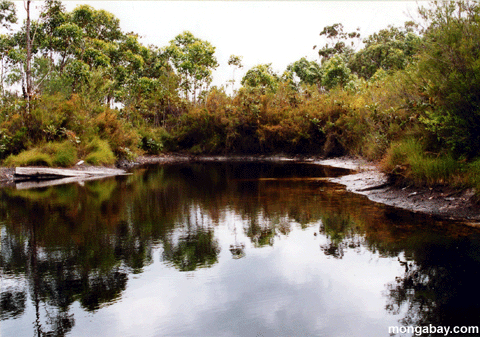
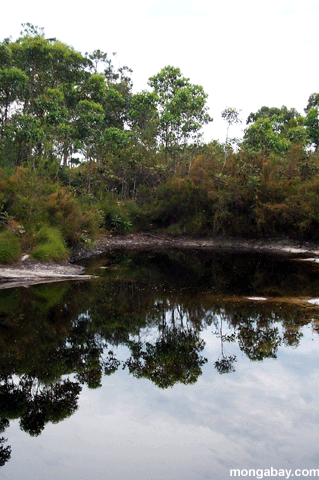
Fraser Island Habitats: clearwater australia creek Rainforest creek, Rainforest creek, Eli Creek, Window lake, Window lake, Window lake.
Sand substrate. Very clear water! Soft, acidic water.
+++++++++++++++++++++++++++++
South American Whitewater River
+++++++++++++++++++++++++++++
Whitewater rivers have a muddy brown color with little visibility because of the heavy sediment content.
In the main river, there are almost no plants, and mostly large fish unsuitable for the aquarium.
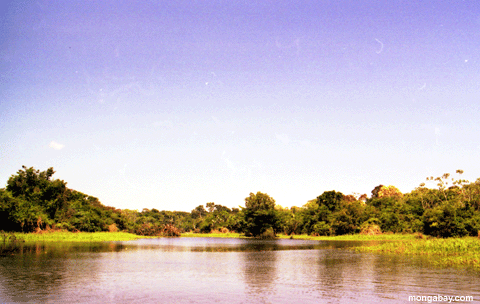
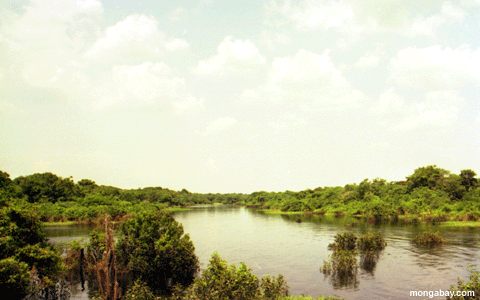
Quiet backwater areas like oxbow lakes have more aquarium fish species, and greater plant life.
Whitewater rivers include the Amazon, the Napo, and the Orinoco.
ECOSYSTEMS:
Amazon River, Orinoco
WATER:
pH 6.8-7.1, 3-8 dH, 79-84 F (26-29 C)
TANK:
The tank should be furnished with driftwood and open swimming areas.
Use a fine gravel, or preferably, clay. Oxbow lakes typically have floating plants and reeds near the shoreline.
PLANTS:
Sword plants, Water Lettuce, Duckweed, Riccia, Vallisneria
FISH:
Oscars, Acaras, Eartheaters, Angelfish, Headstanders, Piranhas, Hatchetfish, Tetras, Pimelodids, Doradids, Loricarids, Corydoras
PHOTOS:
Large Whitewater River: Peru, Peru
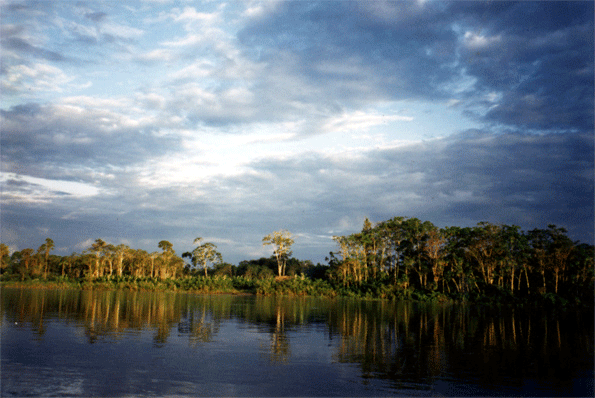
Flooded Forest: Brazil, Brazil, Brazil, Brazil
South American Oxbow Lake: Brazil, Brazil, Peru, Peru, Brazil, Brazil.
South American Whitewater Creek: Peru, Peru, Peru.
++++++++++++++++++++++++++++++
South American Clearwater Stream
++++++++++++++++++++++++++++++
Clear or blue water streams are transparent rivers that drain the Guyana highlands and the Brazil rocky highlands.
These rivers are fast-flowing at times, but slow-moving at others.
The Rio Xingu and Rio Tocantins are typical clear water rivers.
ECOSYSTEMS:
Para-Tocantins
WATER:
pH 6.9-7.3, 5-12 dH, 75-82 F (24-28 C)
TANK:
The tank should have good filtration which keeps the water clear and creates a moderate current.
The lighting should be bright and plant life should be rich.
A substrate of fine gravel is suggested, as are a few pieces of wood.
Aerate the tank well.
PLANTS:
Sword plants, Ceratophyllum, Cabomba, Lemma, Limnobium, Vallisneria
FISH:
Loricarids, Corydoras, Uaru, Mesonauta, Hyphessobrycon.
These waters are preyed by the Peacock Bass.
++++++++++++++++++++++++++++++
South American Blackwater Creek
++++++++++++++++++++++++++++++
++++++++++++++++++++++++++++++
South American Blackwater Stream
++++++++++++++++++++++++++++++
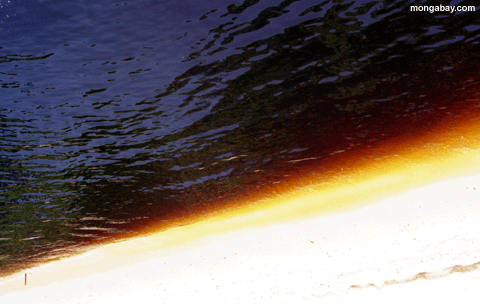
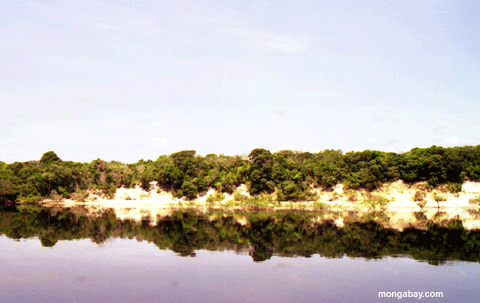
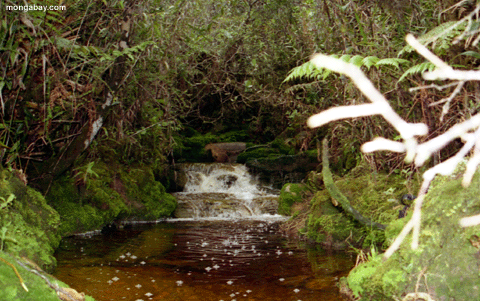
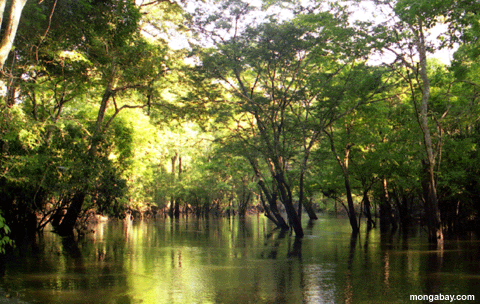
Blackwater ponds, creeks, and rivers originate in the rain-forest. In the slow-moving waters, acids are leeched from decaying vegetation creating very transparent, tea-colored water. These waters have almost no measurable water hardness and an acidic pH.
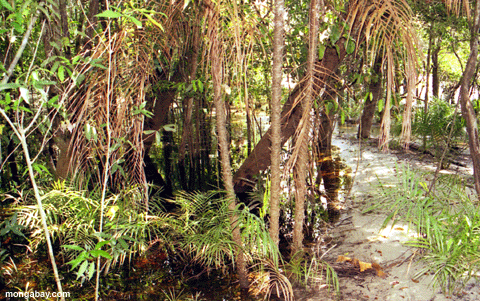
The substrate in blackwater habitats is typically leaf litter over a base of fine clay or sand. Decaying wood and plant matter is common especially in flooded igapo forest. There are many submerged terrestrial plants, many of which retain most of their leaves.
ECOSYSTEMS:
Rio Negro
WATER:
pH: 4.5-6.5, 0-4 dH, 81-86 F (27-30 C)
TANK:
Furnish the tank with bog wood and a dark, fine gravel substrate.
There can be subdued lighting and still water.
Peat filtration is recommended.
PLANTS:
Sword plants, Heteranthera, Ceratophyllum, Vallisneria, Cabomba
FISH:
Discus, Angelfish, Dwarf Cichlids, Tetras, Hatchetfish, Corydoras, Farlowella, Loricarids.
PHOTOS:
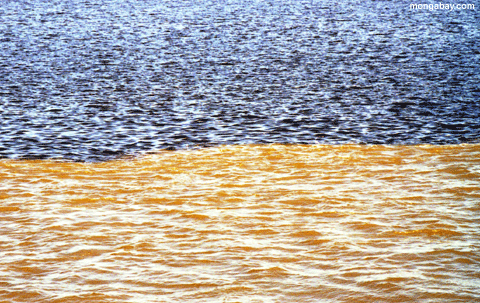
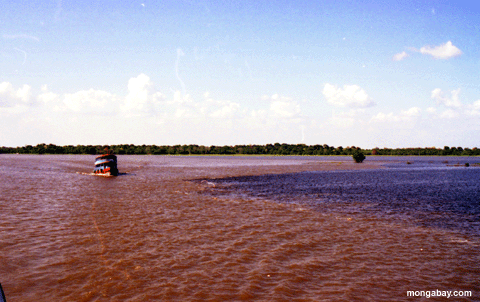
Blackwater River: Brazil, Venezuela, Rio Negro (Brazil), Rio Negro (Brazil), Rio Negro (Brazil), Rio Negro (Brazil), Mixing of Waters - Rio Negro and the Amazon, Mixing of Waters - Rio Negro and the Amazon, Brazil, Brazil, Rio Negro Beach, Rio Negro Beach.
Blackwater Lake: Brazil,
South American Blackwater Creek Mountain blackwater creek: Venezuela, Venezuela, Venezuela.
Blackwater creek: Venezuela
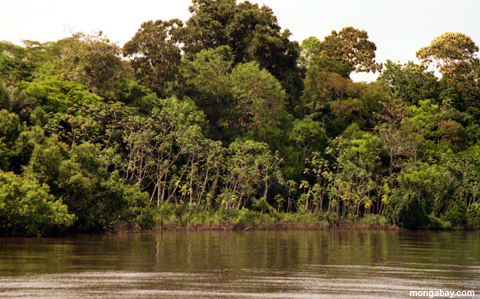
Igapo: Brazil, Brazil, Brazil, Brazil, Brazil, Brazil.
+++++++++++++++++++++++++
Central American Rocky Lake
+++++++++++++++++++++++++
Central America has several great lakes like Atitlan, Managua, and Nicaragua.
The lakes are rocky with hard, alkaline water.
The cichlids in these lakes are generally very territorial and aggressive and should not be combined in the same with peaceful species such as livebearers.
WATER:
7.5-8.2, 15-25 dH, 75-81 F (24-27 C)
TANK:
The tank should be furnished with large, sturdy rock structures.
The substrate can be fine gravel or sand.
There should be little water current.
PLANTS:
There are few plants in these lakes due to the hard water.
In the aquarium, live plants will be destroyed by the cichlids.
FISH:
Loricarids, Pimelodids, Livebearers, lake Cichlasomines.
+++++++++++++++++++++++++
Central American River
+++++++++++++++++++++++++
Central America is rich with rivers flowing from rainforests and highlands.
These rivers are abundant with river shrimp which provide a strong food base for larger fish like cichlids.
The cichlids in these rivers are not as aggressive as those of the Central American lakes.
WATER:
pH: 7.0-7.8, 5-10 dH, 72-79 F (22-26 C)
TANK:
The tank should be large with open swimming areas, submerged wood, river rocks, and a fine gravel or sand substrate.
There should be a moderate current created by a filter that can handle large amounts of waste.
The tank should be brightly illuminated.
Avoid live plants if rough cichlids are kept.
PLANTS:
Vallisneria, Cabomba, Limnobium, Myriophyllum, some species of Sword plant
FISH:
River Cichlasomines, Livebearers, Astyanax, Loricarids, Pimelodids
PHOTOS:
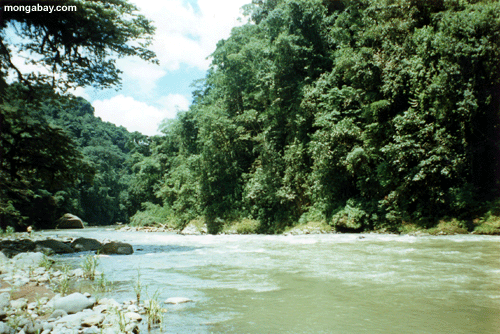
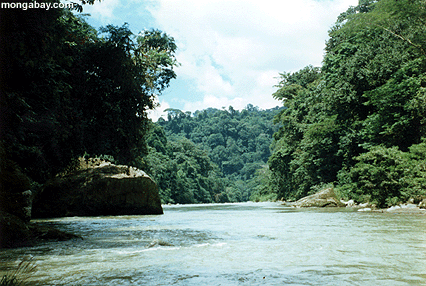
Whitewater river: Costa Rica, Costa Rica, Pacuare (Costa Rica), Costa Rica
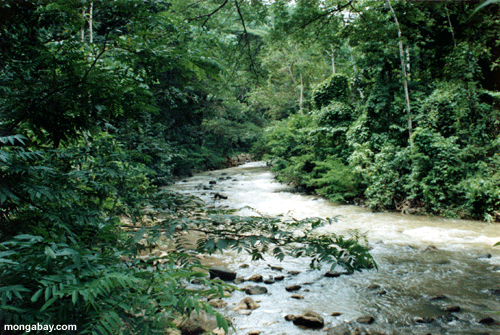
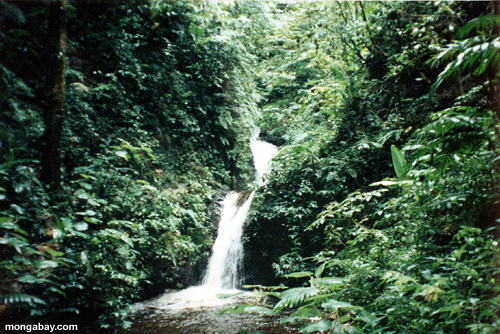
Mountain creek: Costa Rica, Costa Rica (aerial view), Costa Rica. Few cichlids - smaller characins instead.
Rocky creeks: Costa Rica, Belize, Osa Peninsula, Costa Rica, Osa Peninsula, Costa Rica, Costa Rica (Atlantic Slope), Osa Peninsula, Costa Rica.
Lowland river: Costa Rica Atlantic Coast.
Blackwater river pool: Costa Rica, Costa Rica Atlantic Coast.
`'*:-.,_,.-:*'``'*:-.,_,.-:*'``'*:-.,_,.-:*'``'*:-.,_,.-:*'``
Other Biotope Resources

BIOTOPE AQUARIA
Always check compatibility! Some species from a particular habitat are not suitable tankmates. For example, the Peacock Bass will eat small tetras since they are their natural food in the wild.
The biotope aquarium can be adapted by adding species from disparate areas that have similar water requirements.
Mongabay.com is the sole effort of Rhett A. Butler, who has taken the photos and written all of the content found on the site. If you find mongabay.com a useful resource I hope that you may consider making a donation to help support the site. You can also assist by clicking on one of the ad links to the right.
[Photos from various habitats/biotopes]
Freshwater fish species listed by country and ecosystem -- excellent resources for constructing biotope aquaria.
Be sure not to miss links to other biotope resources and sites.
++++++++++++++++++
African River Rapids
++++++++++++++++++
The Zaire (Congo) River is the second largest river system in terms of volume. This mighty river drains much of West and Central Africa. Along its 2800 miles, the Zaire River moves through many environments including over 200 miles of rapids and cataracts. This rapid region is the inspiration for this biotope aquarium, although similar environments exist in other African rivers.
ECOSYSTEMS:
Congo_Zaire, Agnebi, Bandama River, Benue River, Bia River, Buba River, Casamance River, Cross River, Gambia River, Kariba, Little Scarcies, Niger River, Ogun River, Rokel, Saint John, Saint Paul, Saloum, Senegal River, Volta, Weme, Como� River, Corubal River, Ebrie, Fatala, Geba, Kainji Lake, Kogon, Kolente, Konkoure, Loffa, Mano, Mao, Mono River, Nipoue, Pra, Sassandra, Sewa, Tano
WATER:
pH: 7.0-7.5, 6-10 dH, 77-81 F (25-27 C)
TANK:
The water in this habitat is highly oxygenated due to the turbulence created by the rapids -- therefore the water in the aquarium should be well-aerated. Leave plenty of open swimming area, but use some large rocks. The substrate should be fine gravel or sand. To create water current, place a spray bar from a canister filter, or a strong circulating pump at one end of the aquarium.
PLANTS:
Because of the strong water current, the rapids are not a hospitable place for plants.
In the aquarium, plants can be used if they well anchored or protected from the current.
Plants suitable for such an environment include the African Water Fern (Bolbitis heudeloti) and Anubias species.
FISH:
Eutropiellus, Distichodus, Synodontis, Steatocranus, Teleogramma, Lamprologus
+++++++++++++++
Lake Tanganyika
+++++++++++++++
Details on Lake Tanganyika can be found in the fish section on Lake Tanganyika cichlids.
ECOSYSTEMS:
Lake Tanganyika
WATER:
pH: 7.8-9.0, 12-20 dH, 75-82 F (24-28 C)
TANK:
A rocky set-up, complete with caves and ledges is recommended.
The substrate should be fine gravel or sand, scattered with snail shells.
Use an efficient filter that creates little water current.
Make frequent water changes since Lake Tanganyika species are especially sensitive to water pollutants.
PLANTS:
Vallisneria is the only commercially available species, but Anubias and Java Fern are also suitable if the aquariast is willing to bend the biotope rules.
FISH:
Lake Tanganyika cichlids including snail shell-dwellers, Synodontis, Afromastacembelus eels, Tanganyika Rainbowfish.
+++++++++++
Lake Malawi
+++++++++++
Details on Lake Malawi can be found in the fish section on Lake Malawi cichlids.
ECOSYSTEMS:
Lake Malawi
WATER: pH 7.8-9.0, 10-15 dH, 75-81 F (24-27 C)
TANK:
Please see the description on Lake Malawi cichlids for details.
PLANTS:
Vallisneria is the only commercially available species, but Anubias and Java Fern are also suitable if the aquariast is willing to bend the biotope rules.
FISH:
Lake Malawi cichlids (Mbuna, Peacock cichlids, Others), Synodontis
+++++++++++++++++++++++++
West or Central African River
+++++++++++++++++++++++++
West and Central Africa are full of rivers. Some of the better known are the Zaire (Congo), Ubanghi, Niger, and the Gambia.
Within each of these river systems are numerous biotopes -- this description will focus on species found in slow-moving sections and side streams.
ECOSYSTEMS:
Congo_Zaire, Agnebi, Bandama River, Benue River, Bia River, Buba River, Casamance River, Cross River, Gambia River, Kariba, Little Scarcies, Niger River, Ogun River, Rokel, Saint John, Saint Paul, Saloum, Senegal River, Volta, Weme, Como� River, Corubal River, Ebrie, Fatala, Geba, Kainji Lake, Kogon, Kolente, Konkoure, Loffa, Mano, Mao, Mono River, Nipoue, Pra, Sassandra, Sewa, Tano
WATER:
pH 6.9-7.2, 3-8 dH, 75-81 F (24-27 C)
TANK:
The tank should be furnished with wood for hiding places, and fine gravel or sand for a substrate.
The lighting should be muted, and the water should have a slight current.
PLANTS:
African Water Fern, Anubias, Vallisneria, Eleocharis.
FISH:
African tetras, Mormyrids, African Knifefish, African Butterfly fish, Synodontis, Hemichromis, Pelvicachromis, Tilapia
PHOTOS:
This picture was taken in Madagascar but is similar to habitats in West Africa, albeit with cooler temperatures [Mandraka, Madagascar, Mandraka, Madagascar].
+++++++++++++++++++++++++
Southern African Swamp
+++++++++++++++++++++++++
The Okavango Delta is among the largest swamps in Africa. The waters support a variety of species and vigorous plant growth making it an ideal subject for a biotope aquarium.
Reedy plants line the shores of waterways.
ECOSYSTEMS:
Chobe, Limpopo, Linyanti,
WATER:
pH 7.2-7.8, 2-8 dH, 70-75 F (21-24 C)
TANK:
The tank should have fine gravel, sand, or clay for a substrate.
Dense vegetation and floating plants help recreate the natural setting.
Use submerged wood to provide hiding places.
The lighting should be bright and the water should be clear.
PLANTS:
African Water Fern, Ammannia, Marsilea, Eleocharis, Anubias, Nymphaea, Water Lettuce
FISH:
Mormyrids, African tetras, barbs, spiny eels, Haplochromines, Tilapia, Hemichromis, Synodontis, Clarias catfish.
In the neighboring floodplain, annual Killifish can be found.
PHOTOS:
Okavango Delta (Botswana)
++++++++++++++++++++
Southeast Asian River
++++++++++++++++++++
Much of Southeast Asia is rainforest and the location for a number of large rivers.
This biotope aquarium simulates a smaller tributary.
ECOSYSTEMS:
Amudar'ya, Chao Praya River, Irrawaddy, Mekong River, Salween
WATER:
pH 6.0-6.5, 2-8 dH, 79-84 F (26-29 C)
TANK:
The tank should be thickly planted with plenty of hiding places among wood and plants.
Use fine gravel or sand as a substrate.
PLANTS:
Crinum, Ceratopteris, Hygrophila, Cryptocoryne, Nymphaea
FISH:
Loaches, Barbs, Danios, Cyprind sharks (Red-tail, Bala, etc.), Pangasius catfish [suitable only for very large tanks], small Asian catfish, Knifefish
PHOTOS:
White Water River: Borneo White Water River, Borneo, Borneo, Borneo, Borneo, Borneo,


Whitewater creek: Borneo creek

++++++++++++++++++++
Thai Creek
++++++++++++++++++++
++++++++++++++++++++++++++++
Southeast Asian Blackwater Pool
++++++++++++++++++++++++++++
Creeks and streams originating from deep in the rainforest are often blackwater.
With decaying plant vegetation and few, if any, mineral sources, the water is acidic and very soft.
This environment provides a home to many species of plants and fish.
WATER:
pH 5.5-6.5, 0-4 dH, 81-84 F (27-29 C)
TANK:
The tank should be densely planted with a fine gravel or clay substrate.
Use wood to create hiding places and use peat filtration.
There should be little surface current.
PLANTS:
Cryptocoryne, Nymphaea, Eleocharis
FISH:
Gouramis, Bettas, Rasboras, Loaches, Glass Catfish, Cyprind sharks, Flying Fox
PHOTOS:
Blackwater creek: Borneo creek, Borneo creek
Clearwater forest pool Borneo
+++++++++++++++++++++++++++++
Southeast Asian Mangrove Estuary
+++++++++++++++++++++++++++++
Mangrove swamps are found through the world where freshwater rivers come in contact with the ocean.
The result is a tidal region with varying salinity and water conditions.
The tides affect some of the types of fish present in the estuary, although fish termed �brackish water species" remain no matter the condition.
WATER:
pH 7.2-8.0, 10-20 dH, 75-82 F (24-28 C), 1.006-1.015 specific gravity.
TANK:
The tank should have a coral sand substrate.
Use wood and roots to recreate the mangrove roots of the swamp.
Use an efficient filtering system, because brackish water fish are heavy eaters, yet sensitive to water pollutants.
One popular brackish-water set-up is to leave the tank only half full with water. A sandy beach is constructed and potted mangrove seedlings grow above the water surface. Such a set-up allows an aquariast to observe unusual behavior from brackish species such as Mudskippers and Archerfish.
PLANTS:
Few plants can tolerate brackish conditions besides the mangrove.
Java Fern appears to be one of the only aquarium plants suitable for a brackish water tank.
Mangrove seedling can be kept in pots as long as the bulk of the plant is out of the water.
The Mangrove will require frequent pruning to keep it small enough for the aquarium.
FISH:
Mudskippers, Archerfish, Scats, Monos, Tiger fish, Puffers, Gobies, Glassfish, Halfbeaks, Arius catfish, and Celebes Rainbowfish.
PHOTOS:
Similar habitat in Australia (Mangrove estuary)
++++++++++++++++++++
Indian/Burmese River
++++++++++++++++++++
Despite India's tremendous population, there are still habitats for tropical fish species.
Neighboring Burma (Myanmar) shares many of India's interesting species.
ECOSYSTEMS:
Brahmaputra River, Cavally River, Ganges, Indus, Krishna River, Chilka Lake, Chittar River, Godavari, Irrawaddy
WATER:
pH: 7.0-7.7, 6-12 dH, 70-75 F (21-24 C)
TANK:
The tank should have bright lighting, fine gravel or sand, and heavy planting.
Rocks can be used for shelter and hiding places.
PLANTS:
Rotala, Ceratopteris, Aponogeton, Eleocharis, Blyxa
FISH:
Danios, Rosy Barbs, Colisa, Spiny eels, Climbing perches, Badis, Loaches, Gyrinocheilus, Chaca and Glass catfish.
++++++++++++++++
New Guinea River
++++++++++++++++
New Guinea has fish fauna unlike that of Southeast Asia.
New Guinea's fish most resemble those of Australia for good reason, millions of years ago they were part of the same land mass.
The dominant species in the aquarium trade from New Guinea are Rainbowfish.
WATER:
pH 6.5-7.1, 4-8 dH, 75-77 F (23-25 C)
TANK:
A tank with large open swimming areas is suggested for rainbowfish.
The tank should have areas of dense vegetation and bright lighting.
Use a sand substrate.
PLANTS:
Vallisneria, Aponogeton, Ceratopteris, Bolbitis
FISH:
Rainbowfish, Gobies, Australian Arowana, Arius catfish
+++++++++++++++++++++++++++++++
Northern Australia Rainforest Creek
+++++++++++++++++++++++++++++++
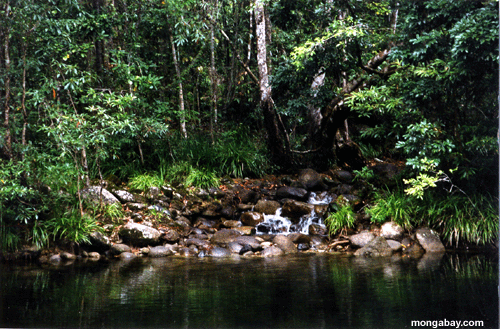
Rivers in the Daintree are highly seasonable -- smaller creeks may nearly dry up in the dry months, leaving scattered pools until rains return. Typically the creeks are boulder-strewn, with river rocks and sand as the substrate. Water current alternates between fast-flowing rapid sections and quiet pools.
WATER:
pH 7-7.5, 10-12 dH, 75-84 F (24-29 C)
TANK:
Use river rocks and a sand substrate. Provide open swimming areas and use a filter that creates current in at least one part of the tank -- rainbowfish are active fish.
Bright lighting, clear water.
PLANTS:
Vallisneria, Aponogeton, Ceratopteris, Bolbitis
FISH:
Rainbowfish, Gobies, Australian Arowana.
PHOTOS:
Daintree rainforest creek: Creek, Creek, Creek, Creek, Atherton Tablelands Creek - Added 10/12/02, Atherton Tablelands Creek - Added 10/12/02


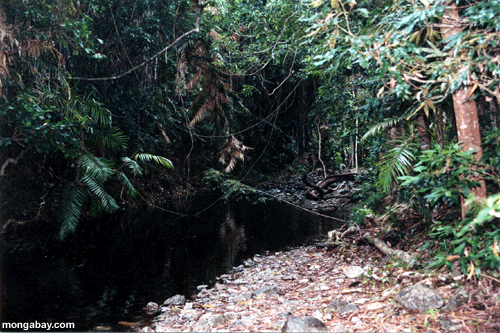
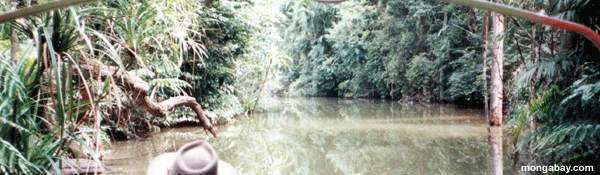
Fraser Island Habitats: clearwater australia creek Rainforest creek, Rainforest creek, Eli Creek, Window lake, Window lake, Window lake.
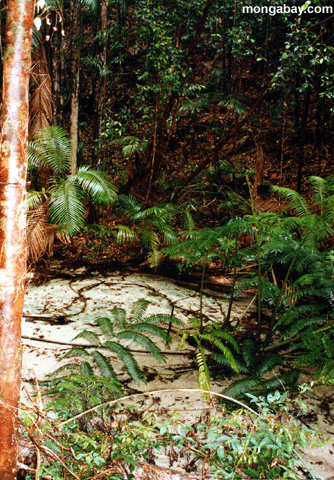
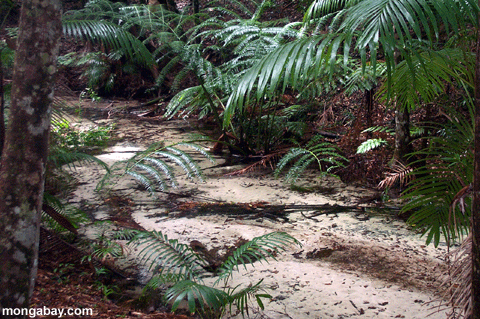

Sand substrate. Very clear water! Soft, acidic water.
+++++++++++++++++++++++++++++
South American Whitewater River
+++++++++++++++++++++++++++++
Whitewater rivers have a muddy brown color with little visibility because of the heavy sediment content.
In the main river, there are almost no plants, and mostly large fish unsuitable for the aquarium.
Quiet backwater areas like oxbow lakes have more aquarium fish species, and greater plant life.
Whitewater rivers include the Amazon, the Napo, and the Orinoco.
ECOSYSTEMS:
Amazon River, Orinoco
WATER:
pH 6.8-7.1, 3-8 dH, 79-84 F (26-29 C)
TANK:
The tank should be furnished with driftwood and open swimming areas.
Use a fine gravel, or preferably, clay. Oxbow lakes typically have floating plants and reeds near the shoreline.
PLANTS:
Sword plants, Water Lettuce, Duckweed, Riccia, Vallisneria
FISH:
Oscars, Acaras, Eartheaters, Angelfish, Headstanders, Piranhas, Hatchetfish, Tetras, Pimelodids, Doradids, Loricarids, Corydoras
PHOTOS:
Large Whitewater River: Peru, Peru

Flooded Forest: Brazil, Brazil, Brazil, Brazil
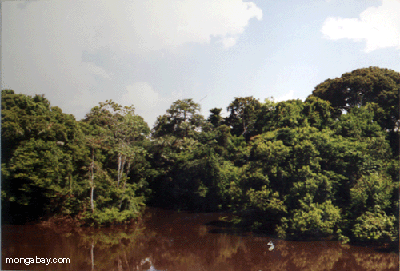


South American Oxbow Lake: Brazil, Brazil, Peru, Peru, Brazil, Brazil.
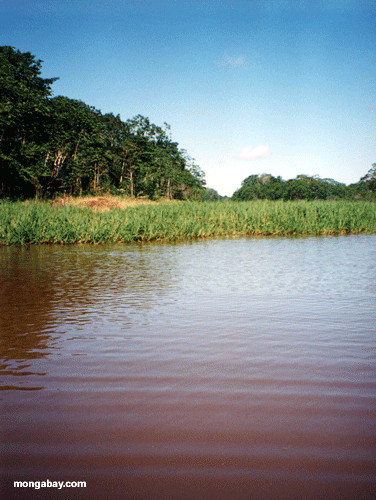


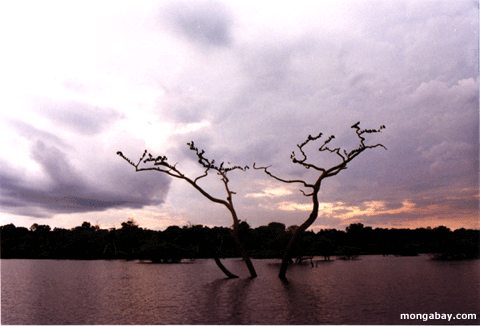
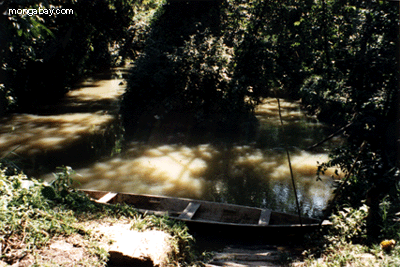
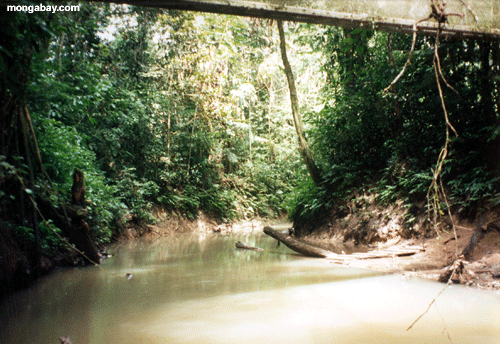
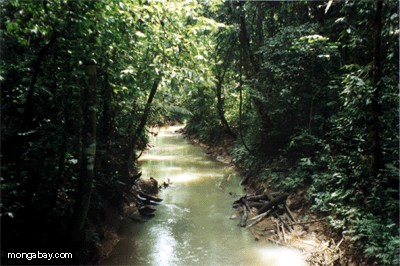
South American Whitewater Creek: Peru, Peru, Peru.
++++++++++++++++++++++++++++++
South American Clearwater Stream
++++++++++++++++++++++++++++++
Clear or blue water streams are transparent rivers that drain the Guyana highlands and the Brazil rocky highlands.
These rivers are fast-flowing at times, but slow-moving at others.
The Rio Xingu and Rio Tocantins are typical clear water rivers.
ECOSYSTEMS:
Para-Tocantins
WATER:
pH 6.9-7.3, 5-12 dH, 75-82 F (24-28 C)
TANK:
The tank should have good filtration which keeps the water clear and creates a moderate current.
The lighting should be bright and plant life should be rich.
A substrate of fine gravel is suggested, as are a few pieces of wood.
Aerate the tank well.
PLANTS:
Sword plants, Ceratophyllum, Cabomba, Lemma, Limnobium, Vallisneria
FISH:
Loricarids, Corydoras, Uaru, Mesonauta, Hyphessobrycon.
These waters are preyed by the Peacock Bass.
++++++++++++++++++++++++++++++
South American Blackwater Creek
++++++++++++++++++++++++++++++
++++++++++++++++++++++++++++++
South American Blackwater Stream
++++++++++++++++++++++++++++++
Blackwater ponds, creeks, and rivers originate in the rain-forest. In the slow-moving waters, acids are leeched from decaying vegetation creating very transparent, tea-colored water. These waters have almost no measurable water hardness and an acidic pH.
The substrate in blackwater habitats is typically leaf litter over a base of fine clay or sand. Decaying wood and plant matter is common especially in flooded igapo forest. There are many submerged terrestrial plants, many of which retain most of their leaves.
ECOSYSTEMS:
Rio Negro
WATER:
pH: 4.5-6.5, 0-4 dH, 81-86 F (27-30 C)
TANK:
Furnish the tank with bog wood and a dark, fine gravel substrate.
There can be subdued lighting and still water.
Peat filtration is recommended.
PLANTS:
Sword plants, Heteranthera, Ceratophyllum, Vallisneria, Cabomba
FISH:
Discus, Angelfish, Dwarf Cichlids, Tetras, Hatchetfish, Corydoras, Farlowella, Loricarids.
PHOTOS:
Blackwater River: Brazil, Venezuela, Rio Negro (Brazil), Rio Negro (Brazil), Rio Negro (Brazil), Rio Negro (Brazil), Mixing of Waters - Rio Negro and the Amazon, Mixing of Waters - Rio Negro and the Amazon, Brazil, Brazil, Rio Negro Beach, Rio Negro Beach.
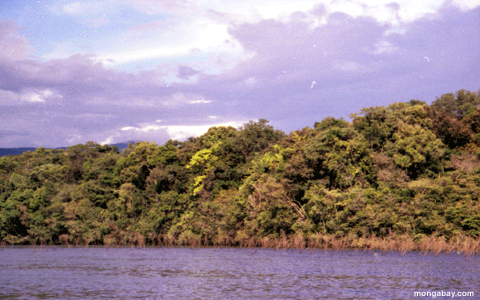


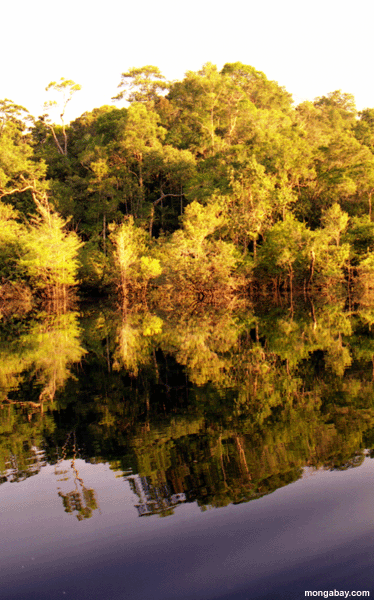
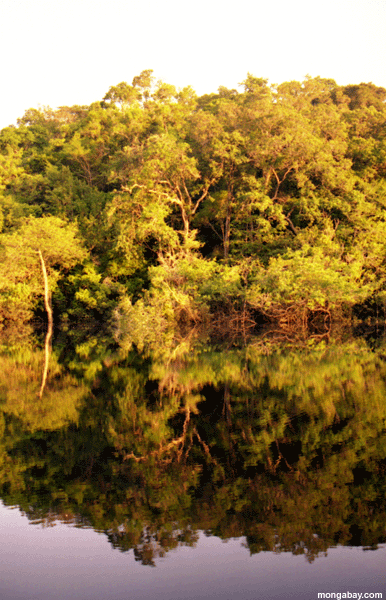
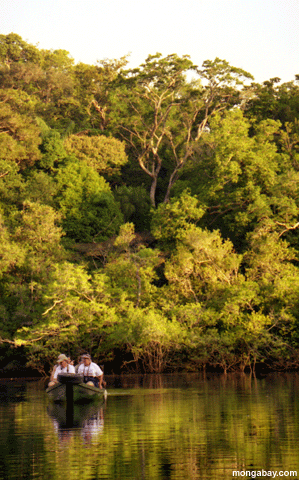
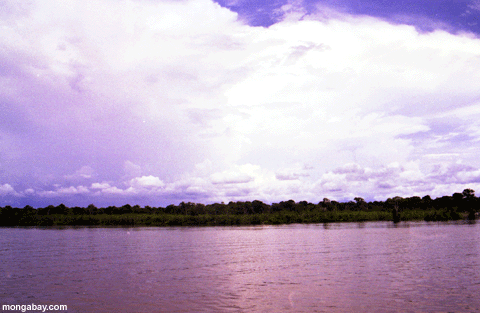
Blackwater Lake: Brazil,

South American Blackwater Creek Mountain blackwater creek: Venezuela, Venezuela, Venezuela.
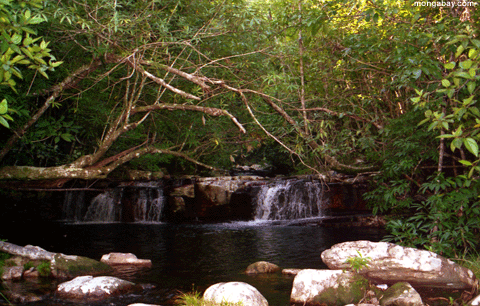

Blackwater creek: Venezuela

Igapo: Brazil, Brazil, Brazil, Brazil, Brazil, Brazil.



+++++++++++++++++++++++++
Central American Rocky Lake
+++++++++++++++++++++++++
Central America has several great lakes like Atitlan, Managua, and Nicaragua.
The lakes are rocky with hard, alkaline water.
The cichlids in these lakes are generally very territorial and aggressive and should not be combined in the same with peaceful species such as livebearers.
WATER:
7.5-8.2, 15-25 dH, 75-81 F (24-27 C)
TANK:
The tank should be furnished with large, sturdy rock structures.
The substrate can be fine gravel or sand.
There should be little water current.
PLANTS:
There are few plants in these lakes due to the hard water.
In the aquarium, live plants will be destroyed by the cichlids.
FISH:
Loricarids, Pimelodids, Livebearers, lake Cichlasomines.
+++++++++++++++++++++++++
Central American River
+++++++++++++++++++++++++
Central America is rich with rivers flowing from rainforests and highlands.
These rivers are abundant with river shrimp which provide a strong food base for larger fish like cichlids.
The cichlids in these rivers are not as aggressive as those of the Central American lakes.
WATER:
pH: 7.0-7.8, 5-10 dH, 72-79 F (22-26 C)
TANK:
The tank should be large with open swimming areas, submerged wood, river rocks, and a fine gravel or sand substrate.
There should be a moderate current created by a filter that can handle large amounts of waste.
The tank should be brightly illuminated.
Avoid live plants if rough cichlids are kept.
PLANTS:
Vallisneria, Cabomba, Limnobium, Myriophyllum, some species of Sword plant
FISH:
River Cichlasomines, Livebearers, Astyanax, Loricarids, Pimelodids
PHOTOS:
Whitewater river: Costa Rica, Costa Rica, Pacuare (Costa Rica), Costa Rica

Mountain creek: Costa Rica, Costa Rica (aerial view), Costa Rica. Few cichlids - smaller characins instead.
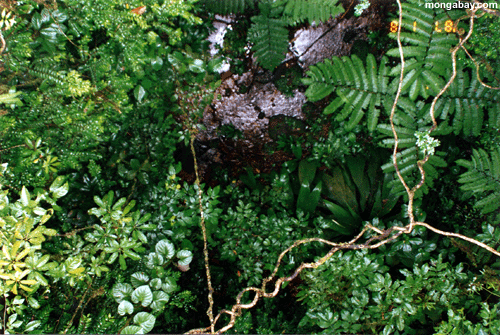

Rocky creeks: Costa Rica, Belize, Osa Peninsula, Costa Rica, Osa Peninsula, Costa Rica, Costa Rica (Atlantic Slope), Osa Peninsula, Costa Rica.

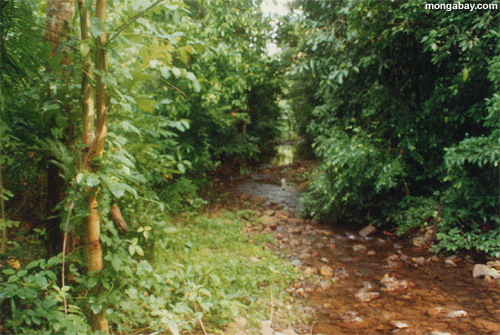
Lowland river: Costa Rica Atlantic Coast.
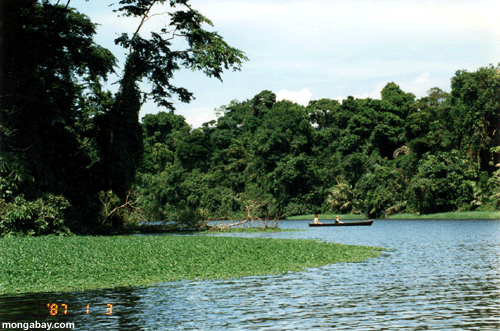
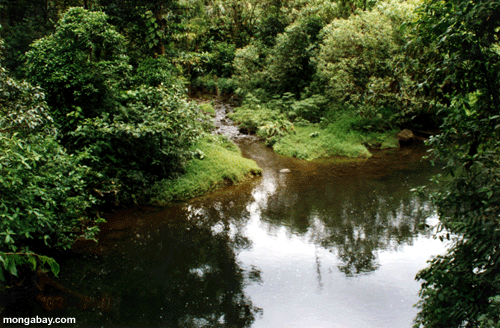
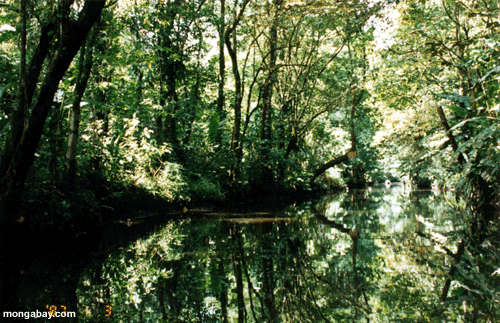
Blackwater river pool: Costa Rica, Costa Rica Atlantic Coast.
`'*:-.,_,.-:*'``'*:-.,_,.-:*'``'*:-.,_,.-:*'``'*:-.,_,.-:*'``
Other Biotope Resources
-
Biotope Aquariums - Freshwater biotope and regional aquarium setups, water chemistry information, care instructions for featured fish and plants
Badman's Tropical Fish - Biotope Aquariums - Biotope Aquarium Info
Loaches Online - A River Runs Through It - Replicating fast flowing rivers and streams for hillstream loaches
Aqua Journal - The Making of Nature Aquarium
Cichlid-Forum.com - The Great Lakes of East Africa
Aqua Botanic Biotope Forum Archives - Archived biotope forum
All Wet Thumb Community [Aqua Botanic] - Rio Negro biotope thread including pictures
All Wet Thumb Community [Aqua Botanic] Biotope Forum - An excellent resource for information on biotope aquaria
NBAT - In Dutch
Tropica.com - Tropical Aquarium Plants
Simply Discus - Amano's pics of some Blackwater habitats
|
Home |About Mongabay |Rainforest |Tropical Fish |Travel |Contribute |Copyright & Use |Contact |